

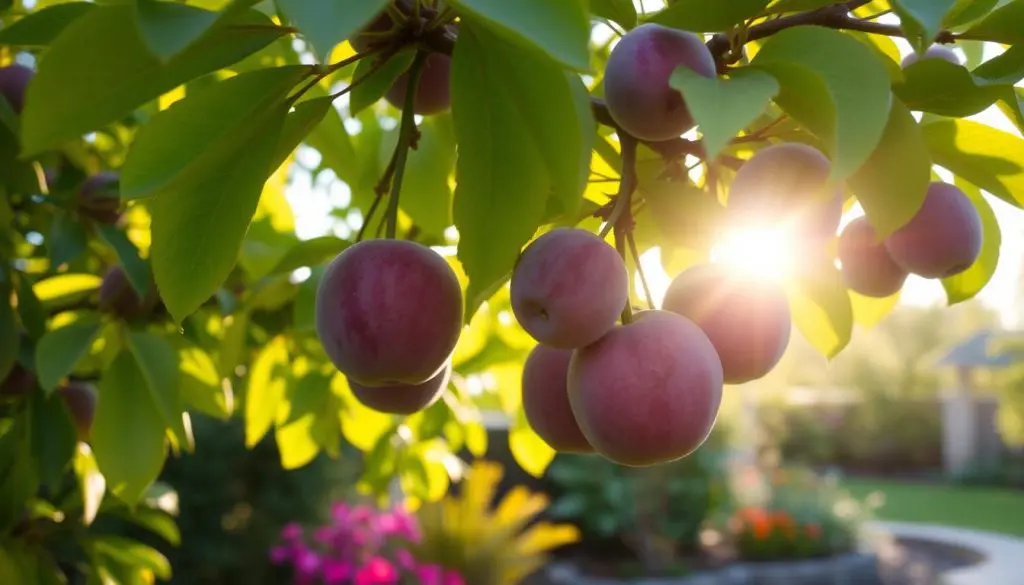
Planning a small orchard often looks simpler on paper than it does in the garden. Space is limited, weather is variable, and pollination groups can quickly turn a neat planting plan into a puzzle. That is why self fertile plum trees are so useful for British growers. They reduce the pressure to match partners, make better use of smaller plots, and give gardeners more flexibility when they want reliable fruit without turning half the lawn into an orchard. For anyone looking to buy self fertile plum trees, the fruit trees specialists at Fruit-Trees nursery advise starting with varieties suited to UK conditions and matching the tree’s vigour to the size of the garden, rather than choosing by flavour alone.
Self fertility does not mean a plum tree can be ignored or planted without thought. It means the tree is capable of setting fruit with its own pollen, so it does not depend on a second compatible plum nearby in order to crop. That one trait makes orchard planning easier, especially in town gardens, newer housing plots, and mixed gardens where only one or two fruit trees can be fitted in. It can also help in exposed areas where cool spring weather keeps pollinating insects quiet for longer than expected. A self fertile tree still benefits from bees, shelter, pruning, and decent soil, but it removes one of the commonest barriers for beginners.
The six varieties below stand out because they simplify decisions without making the final crop feel like a compromise. Some are known for heavy yields, some for flavour, and some for the practical fact that they fit neatly into the British growing season. Together, they show why self fertile plums deserve more attention from gardeners who want useful fruit trees rather than a collection that looks good in catalogues but proves awkward in practice.
Why self fertile plums make more sense in modern gardens
The old model of orchard planning assumed land, time, and a reasonable amount of trial and error. Many gardeners no longer have that luxury. A suburban garden may only have space for one vigorous tree, or perhaps two if careful rootstock choices are made. In those settings, a self fertile plum earns its place because it can be productive without needing a matching partner tree close by. That matters not just for convenience, but for layout, sunlight, and long-term maintenance.
A plum that can crop alone gives the gardener more freedom over spacing. Instead of reserving room for two compatible trees, one tree can be planted exactly where it has the best chance of success: in full sun, with air movement, and on ground that drains properly. It also leaves room for other priorities, whether that is a patio, vegetable beds, lawn space, or another fruit such as an apple or pear. This is especially useful in British gardens where every square metre often needs to perform more than one job.
Self fertile varieties also reduce the risk of disappointment for beginners. Pollination can be explained clearly enough, but in practice it often becomes confusing. Gardeners must think about flowering times, compatibility, weather, and whether neighbouring trees actually count as reliable pollinators. A self fertile plum strips away much of that uncertainty. It is not completely fail-safe, because blossom can still be damaged by frost and fruiting will vary with conditions, but it is easier to manage and easier to understand.
There is also a practical advantage during awkward springs. In some years, cold winds and wet conditions limit bee activity just when blossom is open. A self fertile tree is still helped by insect movement, yet it starts from a stronger position than a tree wholly dependent on cross-pollination. For growers in the UK, where spring can swing from mild to raw within days, that resilience is valuable.
None of this means self fertile plums are only for beginners. Experienced growers use them as anchor trees in mixed orchards because they simplify planning and often provide a dependable baseline crop. They can be trained as bushes, fans, or smaller forms depending on rootstock and site. In short, they fit the way British gardens are actually used now, rather than the way orchards were designed a century ago.
Victoria: the dependable standard that still earns its place
Victoria remains the reference point for plum growing in the UK because it answers so many practical needs at once. It is self fertile, widely available, and capable of producing the sort of crop that convinces people to keep growing fruit. That is one reason it appears so often in gardens old and new. Some varieties may beat it for richness of flavour in a good year, but few combine reliability, familiarity, and flexibility quite so well.
The fruit itself is what many British gardeners picture when they think of a home-grown plum. It ripens to a red-flushed purple over yellow flesh, with a sweet taste that works both fresh from the tree and in the kitchen. Victoria is one of the best examples of a plum that does not force a choice between eating and cooking. Slightly under-ripe fruit can be useful for pies, tarts, and jams, while fully ripe plums soften and sweeten enough for dessert use. That dual purpose matters in a home orchard because heavy crops need more than one outlet.
From a planning point of view, Victoria makes life easier because it suits a wide range of sites. It is vigorous enough to establish well, but it can also be kept within bounds by pruning and sensible rootstock choice. It is often recommended for bush training, though it can also be adapted to fan training against a sunny wall in smaller gardens. That versatility is one of its strengths. Gardeners do not need a specialist orchard setup to make it work.
There are, however, a few considerations. Victoria is famous for cropping heavily, and that can become a problem if fruit is not thinned in good years. Overloaded branches may need support, and biennial tendencies can develop if the tree is allowed to exhaust itself one season and rest the next. Brown rot and other common plum issues also need watching, especially in damp summers. Still, these are management issues rather than flaws that undermine its value.
For orchard planning, Victoria remains a sensible first choice because it offers confidence. A gardener can plant one tree and expect a fair chance of useful harvests without needing to engineer a companion planting scheme. For many households, that alone makes it the variety against which others are judged.
Opal and Marjorie’s Seedling: two reliable options at opposite ends of the season
If Victoria is the standard bearer, Opal and Marjorie’s Seedling show how self fertile plums can also help stretch the season. They are very different in character, yet both make orchard planning easier because they let growers choose ripening time with more control. In practical terms, that means a household can avoid having every plum arrive at once.
Opal is one of the best early self fertile plums for UK gardens. It tends to ripen ahead of many main-season varieties, which gives it value beyond flavour alone. Early fruit is useful because it fills a gap in the garden calendar and avoids part of the late-summer traffic jam when apples, blackberries, courgettes, and tomatoes all demand attention at once. The fruit is generally medium-sized, reddish-purple, and sweet when allowed to ripen properly on the tree. At its best, Opal has a richness that often wins over people who find some plums too sharp or too watery.
For smaller gardens, Opal has another advantage: it is often manageable in size and starts cropping reasonably well. It suits gardeners who want fruit relatively quickly and who may only have room for one compact tree. Because it is self fertile, that compactness is not undermined by needing a partner. The main caution is that early blossom can sometimes be more exposed to frost in colder spots, so position matters.
Marjorie’s Seedling sits much later in the season and plays a different role. It is valued for large, dark fruit, strong cropping, and good keeping qualities compared with softer dessert plums. This makes it particularly useful for households that want a plum with kitchen strength. It can be eaten fresh when properly ripe, but many growers prize it for bottling, preserving, and cooking. In practical terms, that broadens the usefulness of the harvest and reduces waste.
As a planner’s tree, Marjorie’s Seedling is helpful because it extends the orchard year and often crops heavily enough to justify the space. Late varieties can be especially satisfying in mixed gardens because they arrive when early enthusiasm for summer fruit might otherwise be fading. Together, Opal and Marjorie’s Seedling show that choosing self fertile trees is not simply about avoiding pollination problems. It is also a way to build a more orderly harvest pattern, which is one of the least discussed but most useful parts of orchard design.
Czar and Merryweather: strong choices for gardeners who cook as much as they pick
Not every plum tree needs to produce polished dessert fruit. In many British homes, the most valuable tree is the one that provides dependable cooking fruit in quantity. Czar and Merryweather fit that role well, and both deserve more credit in discussions that focus too narrowly on sweetness alone. They are useful orchard trees because they solve a household problem: what to grow when the aim is puddings, preserves, and practical seasonal eating rather than a bowl of perfect plums on the table.
Czar is often described as a cooking plum first, and that is fair. The fruit is dark-skinned, the flesh is firm, and the flavour before full ripeness can be sharp. In the pan, though, it comes into its own. Czar holds shape reasonably well and develops depth when cooked with sugar or used in pies and crumbles. It is also one of the better choices for cooler parts of the UK because it has a reputation for hardiness and reliable cropping. For gardeners in less sheltered districts, that reliability can outweigh the appeal of more delicate dessert varieties.
Because Czar is self fertile, it works well as a single-tree solution in plots where conditions are not ideal. A gardener can place it in the best available sunny spot and know that pollination planning is not the next issue to solve. It also tends to flower relatively early, so frost-prone gardens need care in siting, but that is easier to manage than finding room for multiple compatible trees.
Merryweather is another strong practical choice, producing large purple fruit often used for cooking and preserving. In the kitchen it is particularly useful because the size of the fruit makes preparation straightforward, and the flavour carries well into jams and baked dishes. A heavy-cropping tree with sizeable fruit has real household value, especially for gardeners who think in terms of annual supply rather than occasional treats.
From an orchard-planning perspective, both varieties are efficient. They offer crops that are easy to use at volume, which matters more than it sounds. One of the quiet failures in many home orchards is planting fruit that ripens beautifully but overwhelms the household with produce that no one has a clear use for. Czar and Merryweather avoid that problem by fitting naturally into familiar British cooking habits. They are not showy choices, but they are sensible ones, and sensible trees are often the backbone of the best orchards.
Jubilee and Guinevere: modern answers for flavour, cropping, and smaller spaces
Newer or less traditional choices have widened the options for gardeners who want self fertile plums without relying entirely on the old standards. Jubilee and Guinevere are good examples of varieties that combine strong flavour with the practical advantages modern growers expect. They help prove that ease of orchard planning does not have to mean settling for ordinary fruit.
Jubilee is often noted for large attractive fruit and a flavour profile that appeals strongly to dessert growers. It has some of the strengths that make Victoria popular, but many gardeners find it offers a more refined eating experience when grown well. The plums are typically generously sized, reddish-purple, and sweet enough to work well straight from the tree. For households that want a self fertile plum mainly for fresh eating, Jubilee is often one of the more rewarding choices.
Its value in the garden comes from that combination of self fertility and quality. A dessert plum that does not demand a second pollinator simplifies site planning straight away. In smaller gardens, where every tree must justify itself, that is important. If a gardener is only going to plant one plum, there is a strong argument for choosing a variety that crops independently and still delivers fruit with real table value. Jubilee often answers that brief.
Guinevere is another variety worth attention, particularly for those aiming at compact or carefully planned spaces. It is known for sweet fruit and a manageable growth habit, making it suitable for gardens where a large vigorous tree would be more burden than benefit. A smaller self fertile plum can be transformative in a townhouse garden, side return, or mixed border where fruit growing has to coexist with ornamental planting.
What makes Guinevere especially useful is not just size, but balance. Too often, compact fruit trees are chosen with low expectations attached. The assumption is that a smaller tree will be decorative first and productive second. Guinevere challenges that. With correct pruning, feeding, and sunlight, it can give worthwhile crops while remaining easier to net, prune, and harvest than more forceful varieties.
For orchard planning, these two varieties reflect a shift in priorities. Many gardeners now want fruit trees that fit into lived-in gardens rather than gardens rearranged around fruit trees. Jubilee and Guinevere answer that need. They are self fertile, productive, and practical, but they also keep flavour in the conversation, which is essential if the orchard is going to be enjoyed rather than merely managed.
Choosing the right one for a UK garden
The best self fertile plum is not simply the tastiest one listed in a catalogue. It is the one that matches the site, the household, and the gardener’s actual habits. That is the real lesson behind orchard planning. A tree may be self fertile, healthy, and highly rated, yet still prove wrong for the space if its size, cropping time, or intended use has not been thought through properly.
In a small garden, growth habit and rootstock should come near the top of the list. A strong variety on a vigorous rootstock may still become too large for the available area, shading borders and making pruning awkward. In those cases, a more compact choice such as Guinevere, or a fan-trained tree against a wall, may be more effective than a classic free-standing bush. The point is not simply to fit a tree in, but to fit it in well enough that it remains manageable after five or ten years.
Use also matters. Gardeners who mainly want fruit for eating fresh may lean toward Opal, Jubilee, or Victoria. Those who cook regularly may get more value from Czar, Merryweather, or Marjorie’s Seedling. There is no universal right answer because the success of a fruit tree depends partly on whether the crop is genuinely wanted when it arrives. A heavy harvest is only an advantage if the household knows what to do with it.
Local conditions should shape the decision too. Frost pockets, exposed sites, heavy clay, and wet ground all influence performance. Self fertility simplifies pollination, but it does not cancel the need for a suitable position. Plum trees generally want sun, reasonable shelter, and soil that holds moisture without staying waterlogged. Good planting, mulching, and annual care still matter. So does pruning discipline, especially with plums, which are best pruned in summer to reduce disease risk.
The broader advantage of choosing among self fertile varieties is freedom. A gardener can plan for season, taste, cooking needs, and space before worrying about compatibility charts. That changes the order of decision-making in a very useful way. Instead of asking, “What can I pair together?” the grower can ask, “What tree would actually work best here?” For most modern British gardens, that is the smarter starting point. Self fertile plums do not remove every challenge, but they remove one of the most awkward ones, and that alone makes them some of the most practical fruit trees a gardener can plant.