

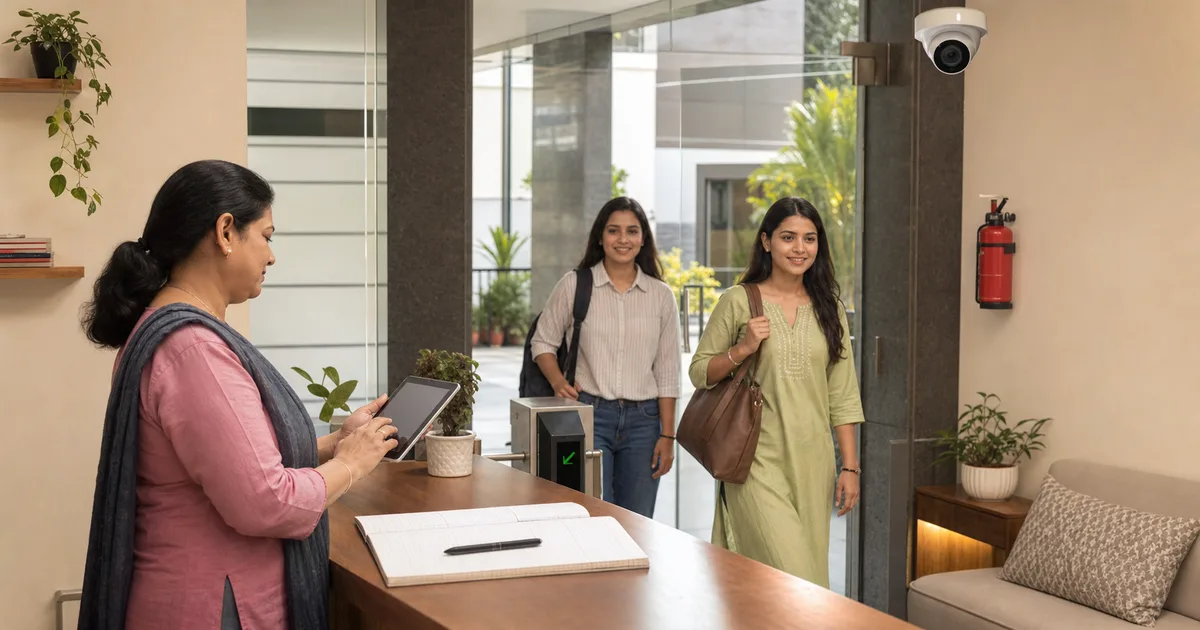
Finding a PG for women in Pune means sorting through listings that all claim to be “safe and secure.” In reality, many properties advertise features like CCTV cameras and security guards without consistent implementation. For working professionals moving to areas like Hinjawadi, Wakad, or Kharadi, verifying actual safety standards is essential. This guide breaks down the security features that genuinely matter so you can make a more informed decision before booking.
This guide breaks down the security features that genuinely protect residents versus the checkbox items that look good in listings but fail in practice. If you’re evaluating PGs or hostels in Pune, particularly in areas like Hinjawadi, Wakad, or Kharadi, here’s what to verify before you sign.
Physical Security: What to Check in Person
The basics matter, but implementation determines effectiveness. CCTV coverage should extend beyond the main entrance; verify cameras cover parking areas, stairwells, and side entrances, with night vision capability and at least 30-day storage. Ask to see footage from different times; if they can’t produce it immediately, the system likely isn’t maintained.
Access control goes deeper than a security guard. Look for biometric entry systems or RFID cards that log who enters when, eliminating unauthorized visitors and creating an audit trail. Single-point entry with controlled visitor registration (including ID verification and resident confirmation) prevents the “friend of a friend” scenarios that compromise safety.
Room-level security includes solid core doors with deadbolts, not the hollow doors with basic locks common in budget PGs. Window grills should be fixed, not removable, especially on ground and first floors.
Operational Security: The Systems Behind Safety
Where properties truly differentiate is in operational protocols. Modern accommodations designed for women implement layered security: digital check-in systems that alert management to unusual entry patterns, 24/7 staffing (not just guard presence but trained personnel who monitor systems), and emergency response protocols with designated safety officers.
Some PGs for women in Pune now use integrated systems such as digital access logs, visitor tracking, and centralized monitoring. These setups can improve overall security by ensuring better visibility of entry, exit, and daily activity within the property.
Background verification of all staff housekeeping, maintenance, and guards should be standard, with regular audits. Ask explicitly: “What’s your staff screening process?” Vague answers signal corners being cut.
Community and Culture: The Underrated Security Layer
Physical security fails without social infrastructure. Properties with active resident communities where neighbors know each other and staff recognize residents naturally deter potential issues. Look for signs during visits: Do residents greet each other? Does staff know people by name?
Communication systems matter equally. Properties should have resident WhatsApp groups, emergency contact protocols, and clear escalation procedures. If something feels off at 2 AM, you need to know exactly who to contact and how quickly they’ll respond.
Management responsiveness tells you everything. During visits, present a hypothetical security concern and gauge their reaction. Do they deflect or detail their procedure? Properties serious about safety welcome these questions.
Making Your Decision
Security in women’s accommodation isn’t about the longest features list; it’s about systems that function consistently and management that prioritizes resident safety over occupancy rates. Visit properties during evening hours when security protocols are most visible, test communication responsiveness before moving in, and trust your instincts. If a property makes you uncomfortable during a daytime visit with staff present, that feeling won’t improve when you’re living there alone at night.
The right PG balances robust security infrastructure with a livable atmosphere; you shouldn’t feel like you’re in a fortress, but you also shouldn’t question whether your valuables or personal safety are at risk.